• Custom Food Packaging: Food Boxes
  • Significant planning goes into packaging foods in a manner that will keep them safe for human consumption and make it possible to transport them over long distances to distributors, retailers, and consumers without damage. Good food packaging is essential not only from a safety or product retention perspective, however. Companies can leverage packaging as a marketing tool to attract new customers and introduce them to a brand. A myriad of different products are competing for customers’ attention in the market, and food packaging design is sometimes the difference between robust sales and customers passing by your product.

    Bling Bling Packaging and Display understands the importance of custom food packaging and brand awareness, which is why we create every design in-house and with customized care. Our team will work with you to help bring your vision of what your packaging should look like into reality. We also offer rapid turn times and high warehouse-to-store efficiency to best serve you. 

    Food Packaging Box Options

    Different box options are necessary for varying food products, and Bling Bling Packaging can provide precisely what you need to ship your products with confidence. Options for custom food boxes include:

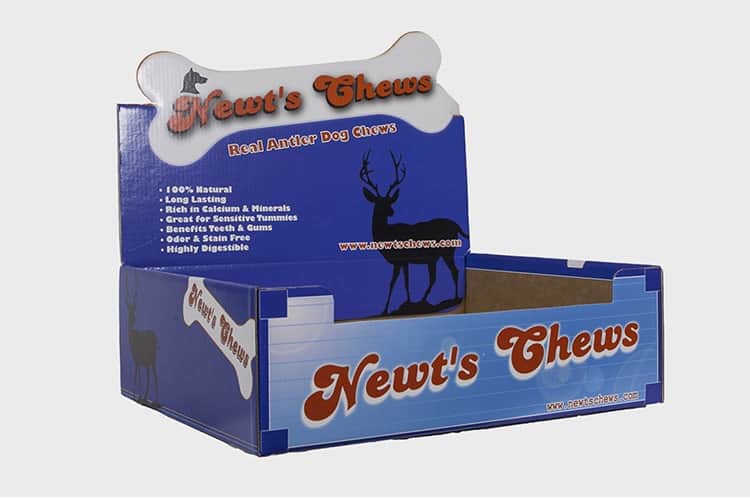
    • Corrugated cardboard. The fluting within the top and bottom liner boards of this environmentally friendly cardboard lends it weight-supporting strength. With printing options for as many as 6 vibrant colors, lightweight corrugated boxes offer superior customization options with custom die cuts available for “b” or “e” flutes.
    • Chipboard. This rigid paperboard comes in thicknesses of 10pt to 24pt. Our team can inline print up to six different colors on these economical boxes. We have the capability to print on solid bleached sulfate (SBS) or clay-coated news back (CCNB) and, if desired, in-house foil stamping and embossing options are available.

    Custom Polycoated Chipboard Boxes for Food Packaging

    Chipboard begins as a slurry of recycled paper and hot water that is ultimately pressed into standard thicknesses with a smooth surface finish and pressed box edges. Chipboard boxes are:

    • Rigid, yet lightweight and flexible. Despite its minimal weight, rigid chipboard holds up well for safeguarding box contents. That said, it is still quite easy to bend, shape, and cut for greater versatility.
    • Eye-catching. Chipboard tends to be more aesthetically pleasing than corrugated cardboard, with a number of coating or finishing capabilities.
    • Effective protection. These boxes offer excellent protection for delicate foods like pasta, crackers, chips, cookies, cereals, and more.
    • Affordable. They are generally more cost-efficient than standard corrugated cardboard to manufacture and ship.
    • Sustainable. As chipboard is composed of recycled material, it is an eco-friendly option.

    Food Packaging Box Design

    Bling Bling Packaging offers numerous options for customers packaging food items. Our design capabilities include:

    • Structural and graphic design. Commoditized packaging may cause consumers to infer from the generic, potentially ill-fitting boxes that the product is of low quality. Instead, you can impress customers using structural packaging with customized configurations and graphic design. This type of packaging lends style and more credibility to your product while maintaining the needed structural integrity. At Bling Bling Packaging, we can also work with you to pinpoint areas for reducing production costs.
    • Prototyping. Prototypes allow you to view how packaging will look for making informed decisions about which design options to select for size, material, and packaging style. Bling Bling Packaging can typically generate a prototype in less than 48 hours, often on the same day.
    • Embossing. Embossing is the process of creating raised text or images on a material. It adds a touch of additional sophistication to packaging. Embossing can add a sense of value to the product, and our team can create customized dies to emboss your logo and more on food packaging for a tactile finish.
    • Foil stamping. Foil stamping involves enhancing certain features on packaging, such as a brand’s logo, to make them stand out and draw customers’ attention. Utilizing a die, Bling Bling Packaging can apply a thin layer of colored foil to your boxes in a variety of colors for a truly customized look.

    Custom Food Box Packaging Solutions

    Food packaging should be strong enough so that your product arrives at its end destination undamaged, but stylistic enough to generate memorable brand recognition. Bling Bling Packaging provides custom food packaging solutions that prioritize aesthetics, form, and function. Our packaging options include chipboard, corrugated cardboard, fiberboard, and clear acetate, with printing in six dynamic colors of your choosing.

    The customization options are nearly limitless with our onsite design and die shop teams. For more information on our custom design capabilities for food packaging, contact us today.

    Countertop Displays

    Countertop displays are often placed on counters or tables to showcase small products and encourage impulse purchases. They are designed with visually appealing graphics and packaging that attract customers’ attention. Moreover, they are effective for small items like candy, gum, and cosmetics, which can be picked up easily and purchased immediately.

    Digital Displays

    Digital displays use screens or projections to create interactive and dynamic product presentations. They can be used to showcase product features, offer special deals or discounts, or provide educational content about the brand or product. They are also particularly suitable for retailers who sell high-tech or complex products, as they allow for detailed and interactive demonstrations.

    Endcap Displays

    Endcap displays are placed at the end of aisles in retail stores. They intend to showcase products and promotions in a highly visible location, increasing shoppers’ chances of being noticed. They can also be customized to fit various products, from electronics and home goods to snacks and beverages.

    Floor Displays

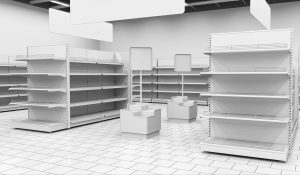
    Floor displays are positioned on the sales floor of a retail store. They are typically large and free-standing and can be used to showcase new or high-demand products. They can also be designed to match the store’s overall branding and visual merchandising strategy, creating a cohesive and inviting shopping environment.

    Design Elements of a POP Display

    A well-designed display can make all the difference in attracting customers and increasing sales. The following are several key design elements to consider during the design process:

    Color is an important design element as it can greatly impact the visibility and effectiveness of the display. Many different color schemes and combinations can be used, depending on the product and branding. Here are some examples:

    • Complementary: Colors opposite each other on the color wheel, such as red and green, create a high-contrast and eye-catching effect.
    • Analogous: Colors next to each other on the color wheel, such as blue and green, generate a harmonious and calming effect.
    • Monochromatic: Using different shades and tones of the same color can create a sophisticated and cohesive look.
    • Warm: Colors such as red, orange, and yellow create a feeling of warmth and energy and are often used to promote food and beverage products.
    • Cool: Colors like blue, green, and purple create a feeling of calmness and relaxation and are utilized to promote health and wellness products.
    Incorporating branding elements into the display can help to build brand recognition and promote brand loyalty. Furthermore, including the company’s logo and other features can create a sense of familiarity and trust with the customer. Additional branding elements include brand colors, font or typography, tone of voice, and personality.
    The layout should be visually appealing, easy to navigate, and highlight the featured product or promotion. Some factors to consider when designing the form include the display’s size and shape, product placement, and branding elements. Balancing visual appeal and functionality is also essential to ensure the display effectively promotes the product.


    Lighting is a crucial design element that can significantly impact the effectiveness of a POP display. Proper lighting can highlight the product and draw attention to the display, making it more visually appealing and attractive. It can also create a mood or ambiance that aligns with the promoted product or brand.

    Several lighting options are to consider when designing a display, including overhead lighting, spotlights, and backlights. The type of lighting used usually depends on the featured product and the desired effect. For example, cosmetic merchandise may benefit from soft, warm lighting that enhances the colors and textures of the product.

    The choice of materials should be based on carefully considering the product, the target audience, and the overall aesthetic. Various materials — including metal, plastic, wood, and cardboard — are available, each with unique properties and benefits. For instance, metal displays are sturdy and durable, ideal for heavy or high-end products.

    Plastic displays can be molded into various shapes and colors, while wood displays are often used for eco-friendly or natural products. In addition, the finish or texture can also impact the display’s visual appeal. A high-gloss finish can create a sleek and modern look, while a matte finish provides a more understated and natural appearance.

    Best Practices for Designing POP Displays

    Designing a successful display requires careful consideration and planning. Here are some best practices to keep in mind:

    3. Prioritize Branding

    When designing a display, it is important to ensure that the brand’s message and personality are consistent throughout. This can be achieved by using the brand’s fonts, colors, and logos prominently and consistently. Additionally, the messaging should align with the brand’s overall marketing strategy and target audience.

    2. Use Eye-Catching Visuals

    Using bold colors, high-quality graphics, and attention-grabbing images can attract customers and increase engagement with the display. Incorporating eye-catching visuals can also make the exhibit stand out in a crowded retail environment and pique the interest of potential customers.

    1. Keep It Simple

    Customers can quickly understand the collection’s purpose and the product’s benefits when the design is simple. This can lead to increased sales and a positive impression of the brand. Conversely, a cluttered or overly complex display can overwhelm the customer and detract from the product.

    5. Test and Refine

    After creating the display, testing it out in the retail environment and obtaining feedback from customers and store staff is crucial. This feedback can then be used to fine-tune the design and enhance future displays. Being open to iterating and improving can guarantee the success and effectiveness of the collection.

    4. Consider the Customer Experience

    Think about the customer’s perspective when designing the display. Consider factors such as the placement of the collection, the ease of product access, and the overall shopping experience. A well-designed display can make the shopping experience more enjoyable and encourage repeat business.

    Bling Bling Packaging: The Trusted Partner for High-Quality Display Solutions

    Bling Bling Packaging has been committed to delivering our customers the highest quality retail packaging, POP displays, and industrial packing solutions! We aim to be the one-stop shop for all our customers’ custom packaging needs. Regardless of their product or budget, we have affordable and innovative custom packaging solutions tailored to their needs.

    Contact us today to see how we can help you elevate your product packaging game!

    Request Quote